Titus Rivas
Senior Registered
The case of Cerunne
In the Spring of 2001 a Dutch friend of mine, Ms. Anja Janssen told me that she knew a married couple in Molenhoek who had a daughter with memories of a previous life. I met all the family members, Christine Thijssen, Sirat Bouts and their four daughters in May of 2001. My team also spoke to them on the phone and asked them questions via normal mail.
The girl who claimed to remember a previous life was called Cerunne and she was 7 when I personally met her. Both her parents had had some belief in reincarnation before the case developed though they weren't interested in propagating it.
Christine had an announcing dream in the eighth month of her pregnancy with Cerunne. She saw a strange "Pictic" woman in her forties, barefoot and dressed in fur, who held deer antlers in her hand. It was as if this woman told her telepathically that she was going to give birth to a daughter and that she should call her "Deer". She also told her the child had had a difficult past life. This experience made the parents choose a Celtic name for their daughter, Cerunne, which is derived from the Celtic divinity Cerunnos or Kernunnos associated with deer and a world between death and rebirth.
During the first two years of her life, Cerunne was a silent child but very quick in her motor development. She also seemed a bit boyish, both physically and psychologically.
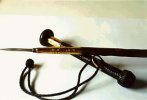
When Cerunne was about 2 or 3 years old, she spontaneously told her parents about a previous life as a sailor. She commented on the waves in a swimming pool saying that she used to see waves which were much higher, as tall as a house. She also told them that life at sea could be very strange. Sometimes there had been a storm all night and the next morning everything was completely silent. Often Cerunne would draw a saling-ship and she claimed that the passenger-ship she had sailed on had been called the Vurk. Aboard, she had many tasks, including watching the sail and pennants and being on watch, but also caring for the passengers. She also described where the adult passengers and the children were lying at night, and stated that they didn't have beds or hammocks, just a pillow and a blanket. They urinated somewhere on the floor, as there wasn't any sanitation around. There were dead cows aboard off which they cut pieces of meat. They also ate raw meat. Sometimes there were fights with knives among the sailors aboard, but she said she couldn't stand rudeness and agression herself. Also, there was an accident in which a friend of hers fell from a mast and broke his back. There was a large rudder. She also mentioned the word "moekille" (Dutch Spelling), a pointed walking stick which was also used as a weapon. Her own name was Peer (Dutch Spelling) and she was a lean man with a black beard.
The ship sailed to la Garoonya or Karoonya (English Spelling) to pick up poor families and take them to a harbour with palm trees, on an island. There were mountains in the background and only a few small shops. The poor families weren't slaves and they were fair-skinned. Sometimes the ship moored illegally. On the island she sometimes slept in filthy huts, but the inhabitants were very nice, relaxed and easy-going.
So far part 1 of this case.
Titus Rivas, Athanasia Foundation
In the Spring of 2001 a Dutch friend of mine, Ms. Anja Janssen told me that she knew a married couple in Molenhoek who had a daughter with memories of a previous life. I met all the family members, Christine Thijssen, Sirat Bouts and their four daughters in May of 2001. My team also spoke to them on the phone and asked them questions via normal mail.
The girl who claimed to remember a previous life was called Cerunne and she was 7 when I personally met her. Both her parents had had some belief in reincarnation before the case developed though they weren't interested in propagating it.
Christine had an announcing dream in the eighth month of her pregnancy with Cerunne. She saw a strange "Pictic" woman in her forties, barefoot and dressed in fur, who held deer antlers in her hand. It was as if this woman told her telepathically that she was going to give birth to a daughter and that she should call her "Deer". She also told her the child had had a difficult past life. This experience made the parents choose a Celtic name for their daughter, Cerunne, which is derived from the Celtic divinity Cerunnos or Kernunnos associated with deer and a world between death and rebirth.
During the first two years of her life, Cerunne was a silent child but very quick in her motor development. She also seemed a bit boyish, both physically and psychologically.
When Cerunne was about 2 or 3 years old, she spontaneously told her parents about a previous life as a sailor. She commented on the waves in a swimming pool saying that she used to see waves which were much higher, as tall as a house. She also told them that life at sea could be very strange. Sometimes there had been a storm all night and the next morning everything was completely silent. Often Cerunne would draw a saling-ship and she claimed that the passenger-ship she had sailed on had been called the Vurk. Aboard, she had many tasks, including watching the sail and pennants and being on watch, but also caring for the passengers. She also described where the adult passengers and the children were lying at night, and stated that they didn't have beds or hammocks, just a pillow and a blanket. They urinated somewhere on the floor, as there wasn't any sanitation around. There were dead cows aboard off which they cut pieces of meat. They also ate raw meat. Sometimes there were fights with knives among the sailors aboard, but she said she couldn't stand rudeness and agression herself. Also, there was an accident in which a friend of hers fell from a mast and broke his back. There was a large rudder. She also mentioned the word "moekille" (Dutch Spelling), a pointed walking stick which was also used as a weapon. Her own name was Peer (Dutch Spelling) and she was a lean man with a black beard.
The ship sailed to la Garoonya or Karoonya (English Spelling) to pick up poor families and take them to a harbour with palm trees, on an island. There were mountains in the background and only a few small shops. The poor families weren't slaves and they were fair-skinned. Sometimes the ship moored illegally. On the island she sometimes slept in filthy huts, but the inhabitants were very nice, relaxed and easy-going.
So far part 1 of this case.
Titus Rivas, Athanasia Foundation