
You are using an out of date browser. It may not display this or other websites correctly.
You should upgrade or use an alternative browser.
You should upgrade or use an alternative browser.
Vietnam Soldier Past Life
- Thread starter Iwaspfcjohn
- Start date
A. Anderson
Member
It was a very violent crash. The jet went into a violent spin and crashed at cruising speed through thick jungle canopy. I can't imagine anyone surviving that. My gut says I died on impact, or shortly afterwards

landsend
Member
My own crash involved violent spinning/falling into thick canopy. The bird crashed but didn’t burn. I blacked out on impact and came to. The co-pilot was recovered by SAR teams 24 hrs later with extensive wounds. My past self never found, no sign of him nearby.
We were flying low altitude and lower speeds though. All that has to be taken into account, but also that jets have the capability of ejection/chute.
We were flying low altitude and lower speeds though. All that has to be taken into account, but also that jets have the capability of ejection/chute.
A. Anderson
Member
I don't think I even had time and the Phantom was spinning like in a barrel roll and I went from in the air to crashing in only a couple seconds. I was extremely low, just barely clearing the treetops. In all likelihood I was probably taken out by a SAM
landsend
Member
I'm no expert on this, but just a few points:
If you were hit by a SAM missile, it would be KABOOM, gone, smithereens. Getting hit by a SAM was rarer than you think -- according to Wikipedia about 200 aircraft were downed by SAM's by the end of the war.
Pretty sure SAM's would be targeting crafts that were flying high altitude, but don't quote me on that one. Could be wrong.
Getting hit by other anti-aircraft projectiles is more likely, such as an anti-aircraft gun. That would be more in keeping with the type of crash you described.
If you were hit by a SAM missile, it would be KABOOM, gone, smithereens. Getting hit by a SAM was rarer than you think -- according to Wikipedia about 200 aircraft were downed by SAM's by the end of the war.
Pretty sure SAM's would be targeting crafts that were flying high altitude, but don't quote me on that one. Could be wrong.
Getting hit by other anti-aircraft projectiles is more likely, such as an anti-aircraft gun. That would be more in keeping with the type of crash you described.
A. Anderson
Member
You're probably right about AA fire. I'm guessing that I lost the whole tail end of the plane, causing me to go into a spin and crash. I do remember hearing an explosion just before I went down though
A. Anderson
Member
Maybe I was flying at such a low altitude for the express reason to avoid SAMs and radar detection. That would at least explain it
landsend
Member
Looking around found this guy: http://www.vvmf.org/Wall-of-Faces/25187/ANDREW-IVAN-JR?page=2
Will look for more as time allows. Let me know if you have any more clues.
Will look for more as time allows. Let me know if you have any more clues.
landsend
Member
Another: http://www.vvmf.org/Wall-of-Faces/34113/MICHAEL-A-MILLER
(Middle name Andrew)
And: http://www.vvmf.org/Wall-of-Faces/1185/WILLIAM-R-ANDREWS?page=1#remembrances
(Middle name Andrew)
And: http://www.vvmf.org/Wall-of-Faces/1185/WILLIAM-R-ANDREWS?page=1#remembrances

SeekerOfKnowledge
Learner
The uniforms I saw during the flashes, I already had thought they were too modern. I am still not sure about this particular possible PL being imagination, because... shouldn't Nam bother me a lot more than stuff from the Middle Ages? Anyway, today I found the image below of an uniform from the mid 1960's. I don't even know what made me google this, I read this thread about the Air Force museum, then suddenly thought of our trip to such a museum and that I somehow liked a special helicopter. My husband said this type was used in Vietnam.
I am getting only minor stuff and slowly, and I'll never know from what life. I am thankful, though.
Checked the Wall of Faces (thank you, landsend). Socks is not there, but then, he might have survived. I feel that I left him behind. Also don't find myself, but as I do not remember how I died... I still have the feeling that I deserted. That after I had killed civilians, I just couldn't go on. In that case, I won't be on the Wall of Faces.
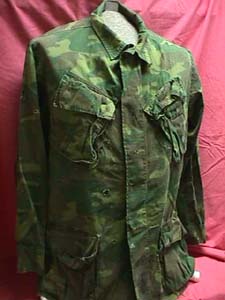
I am getting only minor stuff and slowly, and I'll never know from what life. I am thankful, though.
Checked the Wall of Faces (thank you, landsend). Socks is not there, but then, he might have survived. I feel that I left him behind. Also don't find myself, but as I do not remember how I died... I still have the feeling that I deserted. That after I had killed civilians, I just couldn't go on. In that case, I won't be on the Wall of Faces.

CanSol
Member
Those were late war, more 1970's
Regular military wore complete green or tiger stripe in the same style in the '60's
And everyone has different PLs at the forefront, for Landsend it's Nam, for me mainly WWI and II with Nam knocking on the door louder more resently, my Roman life is basically blank, my Lakota life is just there not getting anything anymore (think because nobody cares about the pipeline at Standing Rock mediawise anymore)
So I'm not surprised that Nam isn't big on your radar (yet)
Regular military wore complete green or tiger stripe in the same style in the '60's
And everyone has different PLs at the forefront, for Landsend it's Nam, for me mainly WWI and II with Nam knocking on the door louder more resently, my Roman life is basically blank, my Lakota life is just there not getting anything anymore (think because nobody cares about the pipeline at Standing Rock mediawise anymore)
So I'm not surprised that Nam isn't big on your radar (yet)
landsend
Member
I always think Nam is a pretty hard pill to swallow, much easy to deny than to take it head on. That's true as much as it was in the 60's as it is today. It's recent, and anything recent will have bigger imprints, too, at least I've found that to be the case. It may be a case of not needing to see it now, or ever. I have knowledge of other past lives, and at the moment one is enough to deal with, thank you very much. The others do poke their heads up here and there, but file them away for 'later'. No pressing needs for them.
I can tell you what I've discovered about the Camo patterns. Back in the early days, if you wanted Camo fatigues, you had to get them made tailor made in country. They were not issued by the military. Later on they became standard ware.
As well as tiger stripe, there were others, such as ERDL pattern. That, my friend, is what you have posted here. It was issued in 1967, but more common onwards from 1968 used by the Marine Corps and the Army adapted it more widely afterwards. A third version was designed in 1970's for the Delta (Mekong Delta) region. (https://en.wikipedia.org/wiki/ERDL_pattern)
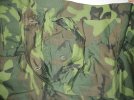
Compare it to the more commonly known Tiger Stripes:

You can see that the ERDL follows a more 'leaf' pattern, and the tiger stripe obviously follows its namesake.
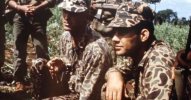
Finally, some rebels and the early SF types bought in their own camo and continued to wear it even after the tiger stripes et al. you know, just to show they'd been around the block and back a few times... These are known as 'Beo gam' or Duck Hunters. Usually these were made in America and bought to Vietnam, at least from what I've seen circulating on the net. The patterns have variations too due to that fact.
I can tell you what I've discovered about the Camo patterns. Back in the early days, if you wanted Camo fatigues, you had to get them made tailor made in country. They were not issued by the military. Later on they became standard ware.
As well as tiger stripe, there were others, such as ERDL pattern. That, my friend, is what you have posted here. It was issued in 1967, but more common onwards from 1968 used by the Marine Corps and the Army adapted it more widely afterwards. A third version was designed in 1970's for the Delta (Mekong Delta) region. (https://en.wikipedia.org/wiki/ERDL_pattern)
Compare it to the more commonly known Tiger Stripes:
You can see that the ERDL follows a more 'leaf' pattern, and the tiger stripe obviously follows its namesake.
Finally, some rebels and the early SF types bought in their own camo and continued to wear it even after the tiger stripes et al. you know, just to show they'd been around the block and back a few times... These are known as 'Beo gam' or Duck Hunters. Usually these were made in America and bought to Vietnam, at least from what I've seen circulating on the net. The patterns have variations too due to that fact.
SeekerOfKnowledge
Learner
Thanks, CalSol and landsend.
I just was surprised that the ERDL-pattern existed before 1970. As I am born in early 1971 and don't know what to think of parallel lives, the pattern had kept me wondering. It is something I really hated as kid, but felt drawn to later, so... who knows. If it hadn't been first person perspective, I would have dismissed the flashes as cryptomnesia, caused by movies.
One never knows what will surface. I don't understand it either why I can't recall PLs in a more "linear" way. How long ago sometimes seems not to matter in my case.
I just was surprised that the ERDL-pattern existed before 1970. As I am born in early 1971 and don't know what to think of parallel lives, the pattern had kept me wondering. It is something I really hated as kid, but felt drawn to later, so... who knows. If it hadn't been first person perspective, I would have dismissed the flashes as cryptomnesia, caused by movies.
One never knows what will surface. I don't understand it either why I can't recall PLs in a more "linear" way. How long ago sometimes seems not to matter in my case.
CanSol
Member
Wiki is not a reliable source, anyone can add and edit something, I've seen so much false info on there that I don't trust a word from it unless I already had it confirmed from a more reliable source
The part where Marines were issued the ERDL in '67 is pretty much certain false, unless the USMC history books themselves are incorrect, which I doubt
Everyone in the USMC was issued standard ODs untill atleast 1969, the only exeption MIGHT be Force Recon but again most photos show OD
The only units that are known to wear the ERDLs in '67 and onwards were small groups of 101st and 173rd Airborne and this was a VERY small group as most kept to the ODs till atleast '69, this has been verified by countless photos
The RVN were issued them for certain around '67
My unit was, and still is, considered to be SF but we've worn nothing else than ODs (atleast my group) because we'd stick out when assigned to units
The part where Marines were issued the ERDL in '67 is pretty much certain false, unless the USMC history books themselves are incorrect, which I doubt
Everyone in the USMC was issued standard ODs untill atleast 1969, the only exeption MIGHT be Force Recon but again most photos show OD
The only units that are known to wear the ERDLs in '67 and onwards were small groups of 101st and 173rd Airborne and this was a VERY small group as most kept to the ODs till atleast '69, this has been verified by countless photos
The RVN were issued them for certain around '67
My unit was, and still is, considered to be SF but we've worn nothing else than ODs (atleast my group) because we'd stick out when assigned to units
SeekerOfKnowledge
Learner
It was not wiki, but a page about military items where they show and explain stuff and where people also can trade uniforms, weapons, badges and such.
If this is false memory, I am just wondering why I constructed this and not something more desirable?
If this is false memory, I am just wondering why I constructed this and not something more desirable?
CanSol
Member
Seeing a specific uniform doesn't provide date and unit (unless you can clearly remember if there was a patch on your shoulder and what kind) it only points to an era
I never said your memories are false or incorrect, I said wiki often is
And if you read my comment then you saw that they were used by certain units
I never said your memories are false or incorrect, I said wiki often is
And if you read my comment then you saw that they were used by certain units
SeekerOfKnowledge
Learner
Of course you never said this, I am having this tendency to not fully trust myself and to set what ever "standard" much higher for myself than for others...
landsend
Member
I first saw ERDL being used on uniforms I found on eBay from late 1960s, they were 101st. Found one that states 1969 as USMC. I think in that instance there’s truth to it.
Seeker, just because they were technically around late 1960s doesn’t mean they were widely used as CanSol said.
But that could possibly point to where you were and what you were doing in Nam.
Seeker, just because they were technically around late 1960s doesn’t mean they were widely used as CanSol said.
But that could possibly point to where you were and what you were doing in Nam.
landsend
Member
I’ll give you my intuitive view. The ERDL pattern looks kinda foreign to me and modern. I don’t recall seeing it whilst there in my past life. He served his first tour 1965-1966 then came again in 1968 to fly choppers. Probably would never seen it, or very rarely. I’m guessing in late 60s it was kept to Recon units.
SeekerOfKnowledge
Learner
Saw it in a museum, not in a vision. A "Huey" aka Bell UHD1 or so. Just was what I liked best, besides the "space" stuff. My husband said that this type of helicopter, while produced in Germany, was used in Vietnam.
So far, I only had two short flashes plus some spontaneous info. Not sure how reliable that is. I don't even know my full name.
Also, older lives come to the surface more often.
Now, in the 20th century, close to my birth in this life, I have the advantage that more information will be available. There are photographs. The information also will be more reliable and complete than historical records from the Middle Ages or even Ancient times.
Looks like I always get just enough to wonder... but never enough to be able to "prove" anything true or false for sure.
So far, I only had two short flashes plus some spontaneous info. Not sure how reliable that is. I don't even know my full name.
Also, older lives come to the surface more often.
Now, in the 20th century, close to my birth in this life, I have the advantage that more information will be available. There are photographs. The information also will be more reliable and complete than historical records from the Middle Ages or even Ancient times.
Looks like I always get just enough to wonder... but never enough to be able to "prove" anything true or false for sure.
CanSol
Member
The Huey was nothing special, they were special to most of us Grunts but material wise they're common, Germany and Canada still uses them
My memories of Nam are still few but had enough breadcrumbs to finally ID myself
It only took me close to 30 years to ID my WWI, II and Nam selves
My memories of Nam are still few but had enough breadcrumbs to finally ID myself
It only took me close to 30 years to ID my WWI, II and Nam selves
landsend
Member
I’d say it was special, it revolutionised warfare. Think how many lives it saved. The War memorial would be a whole lot bigger were it not for the Huey.
The context for the special feeling would be another PL clue IMO.
I went to an air museum too to check out the Cobra they had on display. They also had a Huey and I instantly recognised her. Although it had been in Argentina (that specific craft) I spent a few quiet moments in reverence next to her, especially as it was painted white — it was a Medevac bird. Lots of emotions. Pride, nostalgia, sadness, but mostly pride.
The context for the special feeling would be another PL clue IMO.
I went to an air museum too to check out the Cobra they had on display. They also had a Huey and I instantly recognised her. Although it had been in Argentina (that specific craft) I spent a few quiet moments in reverence next to her, especially as it was painted white — it was a Medevac bird. Lots of emotions. Pride, nostalgia, sadness, but mostly pride.
Last edited: