• Thank you to Carol and Steve Bowman, the forum owners, for our new upgrade!

Tomo - Japanese / scottish case of 2000

4. Royal Hospital for Sick Children, Yorkhill, Glasgow, Scotland
(in 2015 this hospital was renamed and repurposed as the
West Glasgow Ambulatory Care Hospital)
(6-8 floors, estimated, 52 miles west of Edinburgh)

royal-hospital-for-sick-children-yorkhill-glasgow-DBTG1A.jpg


Media_625408_smxx.jpg


The elevator might have indicated 13 floors (including basement and or other subterranean levels).
upload_2020-12-22_15-43-12.png

upload_2020-12-22_15-44-56.png
 
And just to be clear. I'm sitting here with a stack of Death Registration Certificates for all 8, 9, 10, 11, and most of the 12 year old boys who died and were registered in Scotland from Jan 1, 1997, to Dec 31, 1999. Not one was either born on August 9th (any year) and / or died on Oct 24/25th 1997-1999 (except Candidate 79 who was born Aug 9).

How did you get this information? Is it from Scotlandspeople? Or did you pay an awful lot of money to request all those certificates?
 
@GuySittingintheStands You need to search the top candidates parent's name on Google verbatim, Open Corporate and whatever business registration sites Scottland has. We need to investigate if they owned a restaurant. The restaurant that British Tomo pealed onions at.
 
firefly -- Yes, all the certificates I have come from https://www.scotlandspeople.gov.uk/ . You can register for free, order whichever certificate(s) you are interested in and for 12 pounds each (roughly $ 15 U.S. ) plus 3.45 pounds for postage (roughly $ 5 U.S.) , they will mail it (them) to you. Expect delivery in 2-3 weeks. I've spread out my requests over months -- since June 2019 (post #19, page 1) so as to lighten the financial load. Anyone interested in doing any research associated with this project can order and probably should order at least one certificate so they can see for themselves exactly what kind of information is available to them. It's pretty painless.

Contrast -- Why do you believe British Tomo's parents owned a restaurant? According to Ohkado's 2013 Journal of Scientific Exploration paper, Tomo claims to have been "a child of a restaurant", which doesn't make sense in English, so I'm assuming something got lost in translation. It could mean "a child of a restaurateur", as you've proposed, but it doesn't have to be interpreted so. The Jan 2019 japantimes article ( https://www.japantimes.co.jp/news/2.../end-era-gives-japan-chance-hit-reset-button/ ) says that British Tomo's father was a chef, but it also says that Tomo, who is normally left-handed, peeled garlic with his right hand -- which is the exact opposite of what is stated in the 2013 JSE paper. (journalists!). Yes, Tomo must have worked in restaurant or pub as a child, which implies that either one or both of his parents were associated with a restaurant or pub in some capacity, but that could mean any number of jobs or professions, from member of the waitstaff, to janitor, to cook, to chef, to manager, to owner.
 
In general, children at work seem out of place. Especially if they are pealing garlic.

Not so strange at all. Especially when both parents work in the same place. After school, the children go to see their parents, especially when they are that young. I can only imagine this situation when the parents own the place. It's not common/normal for a waiter or a manager to bring in their kids during worktime.

firefly -- Yes, all the certificates I have come from https://www.scotlandspeople.gov.uk/ . You can register for free, order whichever certificate(s) you are interested in and for 12 pounds each (roughly $ 15 U.S. ) plus 3.45 pounds for postage (roughly $ 5 U.S.) , they will mail it (them) to you. Expect delivery in 2-3 weeks. I've spread out my requests over months -- since June 2019 (post #19, page 1) so as to lighten the financial load. Anyone interested in doing any research associated with this project can order and probably should order at least one certificate so they can see for themselves exactly what kind of information is available to them. It's pretty painless.

Wow, I am impressed. That has been an awful lot of money. I had registered myself as well but I am not going to spend all that money on certificates. o_O

.
 
I just want to mention that, and please don't interpret this in a racist way, that here in Germany when I go to a turkish or vietnamese restaurant (not just take-away but also in a usual gastronomy) there are very often children doing their school work on the dining tables which are supposed for the staff and I also see these kids serving/opening bottles for the guests or carring stuff from A to B for their parents. Sure, that's only the case when the parents are the owners of that restaurant.

I also want to say that it still seems very bizarre to me that a child says, that he used to read/see an advertising for JAPANESE SOY SAUCE in a previous life when in his current life he IS JAPANESE? That doesn't make any sense to me. Would you say "I already knew american peanut butter when I used to live in a country on a different continent"?
 
Last edited:
Tomo claimed his previous past-life personality was born Aug 9, 1988 and died Oct 24/25, 1997. Listed below are the birth – death dates obtained from the death registration certificates for all boys ages 8, 9, 10, 11, and 12 who died Jan 1, 1997 to Dec 31, 1999 in Scotland.

Dates marked “a” indicate deaths caused by accidents (like vehicular crashes, smoke inhalation, electrocution, falls, etc.) and a handful of apparently intentional deaths (like murder, suicide). Because Tomo claimed his past-life personality (PP) died in hospital after undergoing an operation which led to high fever, cases involving accidental (and intentional) deaths are highly unlikely to match Tomo’s other claims about his past-life personality and in my opinion aren’t worth investigating further.

Dates marked “p” indicate deaths occurring before the Sept 19, 1997 Southall train crash. One of these cases may still match Tomo’s PP but would at some point need an explanation as to why a memory of watching a breaking BBC TV newscast of a train crash in the south of England could be possible given Tomo’s PP assumed state at the time (namely, dead).

Associated posts are post # 39, page 2 (list of candidates in no particular order); and post # 52, page 3 (list of candidates listed by age at time death).

Compilation of birth – death dates for all boys ages 8, 9, 10, 11, and 12 who died Jan 1, 1997 to Dec 31, 1999 in Scotland.
(Note: Deaths at the end of Dec 1999 which were not registered until Jan 2000 are not yet included. Death registrations for Jan 2000, as well as for 13-year-olds, have not yet been ordered.)

Sep 15 – Nov 29
Aug 25 – Nov 27
Mar 12 – Nov 27; a
Nov 11 – Nov 26
Jul 10 – Nov 25; a
Mar 8 – Nov 20; a
Dec 13 – Nov 15; a
Mar 12 – Nov 10
Feb 29 – Nov 13; a
Jan 21 – Nov 7
Feb 23 – Nov 3; a
*** Nov 5 Bonfire Night Fireworks ***
Sep 14 – Oct 23
Apr 3 – Oct 19
Nov 17 – Oct 18
Dec 31 – Oct 17
Feb 27 – Oct 11
Mar 25 – Oct 9; a
Oct 17 – Oct 6; a
Nov 26 – Oct 4
Jan 16 – Oct 2
Dec 8 – Oct 2; a

Jan 31 – Sep 26; a
Aug 4 – Sep 25; a
May 10 – Sep 13
Nov 12 – Sep 10; a
Oct 16 – Sep 10; p
Aug 9 – Sep 9; a
Feb 24 – Sep 7

Feb 1 – Aug 26; p
Dec 5 – Aug 23; p
Jun 21 – Aug 23; a
Jan 10 – Aug 20; p
Aug 11 – Aug 12; a, p
Mar 6 – Aug 11; a
Aug 18 – Aug 5

Jul 4 – Jul 29
Jan 31 – Jul 24
Aug 4 – Jul 21; a, p
Aug 25 – Jul 13; a, p
Jun 9 – Jul 12
Jan 26 – Jul 8; a
Dec 8 – Jul 6; a
July 2 – Jul 5; a, p
May 20 – July 1; a

Sep 1 – Jun 20
Jun 23 – Jun 18

Feb 17 – May 29; a
Apr 12 – May 23; p
Aug 6 – May 22
Jan 2 – May 19
Sep 24 – May 13; a
Jul 12 – May 11

Nov 24 – Apr 27; a, p
Jul 3 – Apr 24; a
Nov 26 – Apr 23
Nov 17 – Apr 22; a
Aug 11 – Apr 22
Dec 12 – Apr 11
Nov 28 – Apr 10; a
Aug 6 – Apr 10
May 7 – Apr 3; a

Feb 5 – Mar 24; a
May 22 – Mar 15; a
Sep 24 – Mar 12; a
Mar 10 – Mar 12; a

Sep 16 – Feb 27
Apr 29 – Feb 21
Oct 20 - Feb 17

Aug 30 – Jan 17
Aug 12 – Jan 9; p
Apr 20 – Jan 7; a
Apr 20 – Jan 7; a
Jul 9 – Jan 5
Jun 4 – Jan 4; a
Mar 5 – Jan 2
*** Dec 31 New Year's Eve/ Hogmanay Fireworks ***
Mar 6 – Dec 27
Aug 21 – Dec 26
Aug 19 – Dec 26
Dec 5 – Dec 22; a
Aug 29 – Dec 19
Apr 26 – Dec 19; a
Jan 20 – Dec 19; a
Jun 7 – Dec 13
Nov 29 – Dec 10
Jan 12 – Dec 8
Feb 27 – Dec 4
 
Last edited:
View attachment 2476


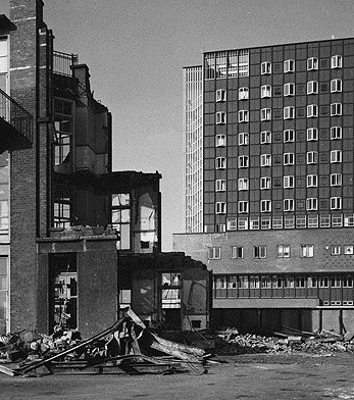
Menzieshill Multis (Multistorey) Council Tower Blocks (also called Menzieshill 9th Development) on Dickson Avenue, Dundee, Scotland, 1994. The 15-storey tower blocks were centered on what is today Orleans Place (3 Dickson Avenue), Dundee. All five blocks were demolished in 2010-2011 to make way for newer low-rise council flats/ public housing. Parking for Ninewells Hospital is visible on the right-side of this photo. The hospital, which is to the right of the parking lot and therefore out of the picture, is less than 400 feet (130 meters) from the tower blocks.

Reference: https://canmore.org.uk/site/70493/dundee-menzieshill-9th-development

https://canmore.org.uk/site/70493/dundee-menzieshill-9th-development?display=image

I wonder if Tomo's PP's family if not Tomo's PP himself might have stayed in one of these council tower blocks (public housing) during Tomo PP's stay in hospital.


Not sure if you’re aware, but “Menzies” is actually pronounced like “mingiss” in Scottish. This reminds me of the “muginba” term used by Tomo for where he was that we haven’t been able to pinpoint!

There is even a place called Menzieshill Parish Church http://www.menzieshillparishchurch.org.uk/

This is a video I found of a local from the church speaking and you can hear the pronunciation is “Mengisshill Parish Church”. He says it right in the beginning:

This is exciting to me. Could it be linked?

I looked to see if there is such a place as Menziesburg (bra) or Menziesborough (burra) that could possibly be this “Muginba” place but found nothing. Could be colloquial, though.

Anyone Scottish here have any ideas? :)
 
Last edited:
Bravo Summer785! I was wondering when someone was going to notice this. I've been trying to come up with a plausible derivation of Menzieshill [pronounced MEEN-gis-hill] Multi's to get to Muginba for the last 4 weeks, and I think I can almost get there. We agree that "Paresu" is Parish, as in the Menzieshill Parish Church that sits just a few hundred yards (meters) further up Menzies Hill from Ninewells Hospital on the western edge of Dundee, Scotland.

You need to have a little familiarity with something called linguistic prosody theory, and in this case, Japanese prosody. Oh yes, and things like moras, and long and short syllables, and permissible and impermissible codas in Japanese. And you need to understand how Japanese, but especially the Kansai dialect, deletes and adds nasals ("N") at the end of long and short syllables (and when you can and can't) and why.

For starters -s in coda position in Japanese syllables is not allowed so it drops: MEEN-gi-hill. Nasals like -n are allowed, so it get added -- especially in the Kansai dialect: MEEN-gin-hill.

Next, syllables ("moras" in prosody theory) like MEEN are not allowed in Japanese prosody since only a maximum of 2 moras are allowed (-EEN has 3, 2 for long E, and 1 for the -n), so the -n drops: MEE-gin-hill.
It's also possible that a Japanese speaker would shorten the - EE- in MEEN- to get a sort of schwa sound or even an uh sound to conform to Japanese prosody rules: M@n-gin-hill (@ = schwa, a short a or u sound).

A Japanese speaker would convert the -hill (Scottish -hell) to -hiru or -heru.

A Kansai dialect speaker, who drops and adds -n 's in free variation might go further and pronounce this as: M@-gin-hiru, so M@-gin-hiru Multi 's, where, I'm speculating, Multi's becomes -ba :

M@ginhiru-ba Paresu "Mengishill ["Menzieshill'] Parish".

And, Sheeply, I know "ba" means 'place' in Japanese.

Once again, bravo Summer785, I think you're on the right track!

PS: There is also a "Moonzie Parish" in Fife, Scotland, but the z is pronounced as z, not g.
https://en.wikipedia.org/wiki/Moonzie
 
Last edited:
GSITS:

I wish I could go further with this thought but I know nothing of Japanese unfortunately, and only a small passing knowledge of anything related to linguistics. I honestly don’t know where to go from here. I have followed this thread from the beginning and find it so fascinating and wish there was more information out there about it!

Were you ever able to reach out to Dr. Ohkado? Because interestingly he does have a background in both Japanese (naturally) and linguistics! You seem to have extensive knowledge as well (hmm maybe you are Dr. Ohkado? ;) *kidding*)— but do you think Menzieshill could very well be the place Tomo is referencing?
 
Last edited:
Just keep googling stuff. It's amazing what you can find on the internet.

Yes, but don't let me prejudice anybody else's research. We'll end up like 6-year-olds all running towards the same soccer ball. Since I can't quite derive one from the other, that is, Mu-gi-n-ba Pa-re-su from "Menzieshill [MEEN-gis-hill] Parish" I don't think I could use it in a paper, but this, along with other evidence, does point us toward Ninewells Hospital, don'tcha think? But that's just my opinion. You may have found something else that points to a different hospital/ city, and you should follow up on that.
 
Last edited:
I thought the repetition/ recitation of the following quotes -- almost verbatim -- from Ohkado's 2013 JSE paper a little strange:

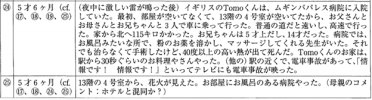
(17) 4.2 years old (cf. (18), (24), (25)) “British Tomo was hospitalized at ‘Muginba Paresu’ [as transcribed in the diary in Japanese letters] hospital.2 At first no room was available. When room 4 on the 13th floor became available, four of us, father, mother, (elder) brother, and me went there by car. It was 115 kilometers from my house to the hospital. Since it was far away, we used a highway. My brother was five years older than me and 14 at that time. In the hospital, there was a place like a bath, and there was a doctor who put powder medicine into hot water and massaged me. The treatment didn’t work and I had an operation. I had a fever of 40 Celsius and died.”

(24) 5.6 years old (cf. (17), (18), (19), (25)) (After a thunderstorm at night) “British Tomo was hospitalized in Muginba Paresu hospital. At first there was no room available. Then, room 4 of the 13th floor became available, so my father, mother, brother, and I went there. We used a highway because the hospital was far away. It was located 115 kilometers to the north from my house. My brother was 5 years older than I, 14 years old. In the hospital, in a bath-like place, a doctor poured powder medicine into hot water and massaged me. It didn’t work and I had an operation. But I had a high fever of 40 Celsius and died."

(17) Tomo at 4 years 2 months old:

1. British Tomo was hospitalized at ‘Muginba Paresu’ hospital.
2. At first no room was available.
3. When room 4 on the 13th floor became available, four of us, father, mother, (elder) brother, and me went there by car.
4. It was 115 kilometers from my house to the hospital.
5. Since it was far away, we used a highway.
6. My brother was five years older than me and 14 at that time.
7. In the hospital, there was a place like a bath, and there was a doctor who put powder medicine into hot water and massaged me.
8. The treatment didn’t work and I had an operation.
9. I had a fever of 40 Celsius and died.

(24) Tomo at 5 years 6 months old:

1. British Tomo was hospitalized in Muginba Paresu hospital.
2. At first there was no room available.
3. Then, room 4 of the 13th floor became available, so my father, mother, brother, and I went there.
4. We used a highway because the hospital was far away.
5. It was located 115 kilometers to the north from my house.
6. My brother was 5 years older than I, 14 years old.
7. In the hospital, in a bath-like place, a doctor poured powder medicine into hot water and massaged me.
8. It didn’t work and I had an operation.
9. But I had a high fever of 40 Celsius and died.

We are supposed to believe that Tomo was able to recall almost verbatim his memory of what happened to him in his past life in the exact same sequence a year after first relaying the above account of his hospital visit and subsequent death to his mother. Verbatim. In the same sequence. Really?

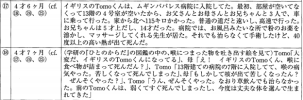
Here are the same two virtually identical accounts in Japanese from Ohkado's original 2011 paper:
Ohkado, M. (2011). Kakosei no kioku o motsu kodomo ni tsuite: Nihonjin jidou no Jirei. Jintai kagaku [Society for Mind-Body Science 20 (1) : 33-42]
[“Child who gained the ability to retain the memory of a previous life: Japanese children’s case.” Ohkado 2011: 37-38]
upload_2021-1-28_10-10-25.png

upload_2021-1-28_10-10-54.png

(To more easily view these attachments you have to log into the forum, then click on the image, right click on "Save Image As", and save to your Desktop. From there you can magnify the image as you like.)
 
Last edited:
Here's how to write the months of the year in Japanese:

01-gatsu "one-month" (January)
02-gatsu "two-month" (February)
03-gatsu "three-month" (March)
.
.
10-gatsu "ten-month" (October)
11-gatsu "eleven-month" (November)
12-gatsu "twelve-month" (December)

The numbers "one" and "ten" can't be confused in Japanese, even by a dyslexic Japanese person, as the numbers sound and look quite different:
(the number one is pronounced "ichi" and written as a single horizonal bar - , the number ten is pronounced "juu" and written as a plus sign +).

However, a Japanese person, especially a dyslexic Japanese person, might confuse "01-month" written down as "01-gatsu" or "01-month" with "10-month" or "10-gatsu".

Especially a dyslexic number-centric Japanese child or mother learning or trying to interpret the English names of the month as Japanese month-names.
 
Correct me if I'm wrong, but this case looks unpromising. He gave exact birth and death dates that failed to be matched. I wonder if there are any 90's TV shows, books or anime in Japan about a Scottish Boy's life?
 
https://www.scotsman.com/heritage-a...shares-name-famous-edinburgh-folk-pub-2883492

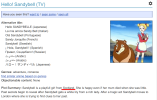
https://www.animenewsnetwork.com/encyclopedia/anime.php?id=1436
upload_2021-2-8_4-0-59.png


We have an anime about a girl from Scotland named "SandyBell". It was named after a pub in Edinburgh, but does not center around one.

It seems extremely unlikely this is where Tomo got his information from. Nothing to do with resteraunt work, or pealing garlic. SandyBell's dog was named "Oliver" and Tomo's dog was named John. The only vague similarity is the father dying off an illness in the show.

- Disclaimer - I did not watch the anime but after reading most of what I could, I could not find anything that can be compared to the Tomo case.
 
I am very interested in this case and I dived into it a few months ago. The main problem is that there was no registered death of a young boy in the time frame young Tomo gave us.

You can jump into Japanese linguistics (also very interesting) but that doesn't solve the problem of the missing (dead) boy. He is not there. I admit his story sounds convincing and there was real evidence to back up his story. I honestly thought that somehow he was to be found in the history of a Scottish hospital.

This lack of a protagonist reminded me of another Scottish story, Camaron Mackaulay. Such a sweet little boy from Glasgow that couldn't stop talking about his life on the isle of Barra in Scotland. Dr. Jim Tucker went with the boy and his mother to the island, they found a lot of evidence. They found his former house and found out who had stayed there in the past, but... never found proof of the existence of his past life persona. Almost as if he had lived an invisible life. There never had lived a young boy there.

Both Tomo and Cameron were very sure and consistent in their stories and I tend to just believe them, although the plain facts are not in their favor.

I can only think of one more option in the case of Tomo and I really don't know if this is legally possible. Suppose his past life persona had another nationality: Pakistani, Indian, Arab. Not impossible, especially in relation to the restaurant and him helping with chores. In some cultures it is not negotiable that someone is buried on foreign ground. In tropical countries someone is buried into the ground within a day (in my (cold) country it takes between 1 and 2 weeks). So if the past life T. was from a culture that was used to arrange the burial immediatly, they might have arranged the transport of the dead body immediatly the same day he died. In Scotland people have three days to register a death. Maybe his family just didn't register his death there but they were already on their way to homeland with his body and forgot or didn't think it was important to finalize the procedures. Maybe they didn't register his death in Scotland but close to the embassy of their homeland (maybe in London). (I guess you need a declaration of death in order to fly with a corps, but maybe all this happened in another way than we think it should have happened).

I also wonder, what happens when you do not register the death of a child? Maybe his parents were immigrants who didn't realize the procedures they had to follow. I guess everybody knows the stories of immigrants in their own land that need the help of their children to read the mail and to answer the telephone. Maybe they also returned to their homeland because of grief.
I am just speculating around, trying to find an answer why there is no registered death of a young boy in Scotland in the time frame that Tomo gave.
 
Good job, Contrast. One of the main plot lines of Hello! Sandybelle (original 1981 Japanese anime Title "Haro! Sandiberu.") is that Sandybelle really misses her mother and sets a goal of finding her, even though it is assumed that the mother is deceased. From wikipedia:

". . . The Countess gives Sandybell a white lily and she plants it outside the village. She also brings other flowers and plants them around the lily, making a small garden of flowers around it. Sandybell treasures the lily because it reminds her of her deceased mother.

Sandybell's goal throughout the series is to find her mother someday. In the final episodes, they finally reunite. However, upon their meeting Sandybell finds that her mother suffers from amnesia, and Sandybell fails to convince her that she was her daughter. Later, when a young child falls into the water and Sandy saves his life, flashbacks strike her mother and she remembers the past."

https://en.wikipedia.org/wiki/Hello!_Sandybell

Similarly Tomo really misses his mother and longs to go back to Scotland one day to find her (according to Ohkado's 2013 JSE paper). Also, Tomo claimed the name of his past-life personality was "Geiris" ("Ge-i-ri-su") which is pretty darn close to the anime character Sandy Belle's last name, "Christie" (Ke-i-ri-su-).

 
Last edited:
fireflydancing -- Interesting speculations but also groundless. I wish I could share more of what I do know at this point but unfortunately I can't risk jeopardizing the project just in case we do come up with a good candidate who may have close living relatives that are worth interviewing. Hang in there everyone.
We're getting there.
 
Last edited:
fireflydancing -- Interesting speculations but also groundless

I know, these are just speculations but I really think there should be an explanation of why there is no registered death of a boy between 8-10 years old in that small timeframe.
It's almost like a murder case: without a body, there is no case at all.

I just wonder why you say the speculations are groundless. They are groundless but possible. If you have more information, it would be fair to share a little more to lift up the veil. Without using names, you could give some description of the direction in which we should think.
 
Ohkado, 2013 JSE, Footnote 5:

"5 In the diary, the name is written as “ge-i-ri-i-su” in Japanese letters. The subject’s mother, who does not speak English, naturally chose to write it down in Japanese, and if the subject had pronounced the word in English (or English-like pronunciation), the transcript might not be very reliable. It could have been even “James.” "

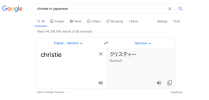
So there's a fairly broad latitude in interpreting "ge-i-ri-su", be it "James" or "Gillis (pronounced Jillis)" or your best guess. But you are right, Contrast, Ku-ri-su- ("Chris-) doesn't look that close to "ge-i-ri-i-su" when you use Google translate.
 
Sandybelle really misses her mother and sets a goal of finding her

Similarly Tomo really misses his mother and longs to go back to Scotland one day to find her

Lots of children that Jim Tucker and Ian Stevenson investigated missed their previous mom and dad and yearned for them. That is a very common theme in CORT. So far I don't see SandyBell as a fitting explanation. However, I will continue to play the role of the skeptic.
 
Back
Top